Former Kindergarten becomes affordable housing for displaced families in Ukraine
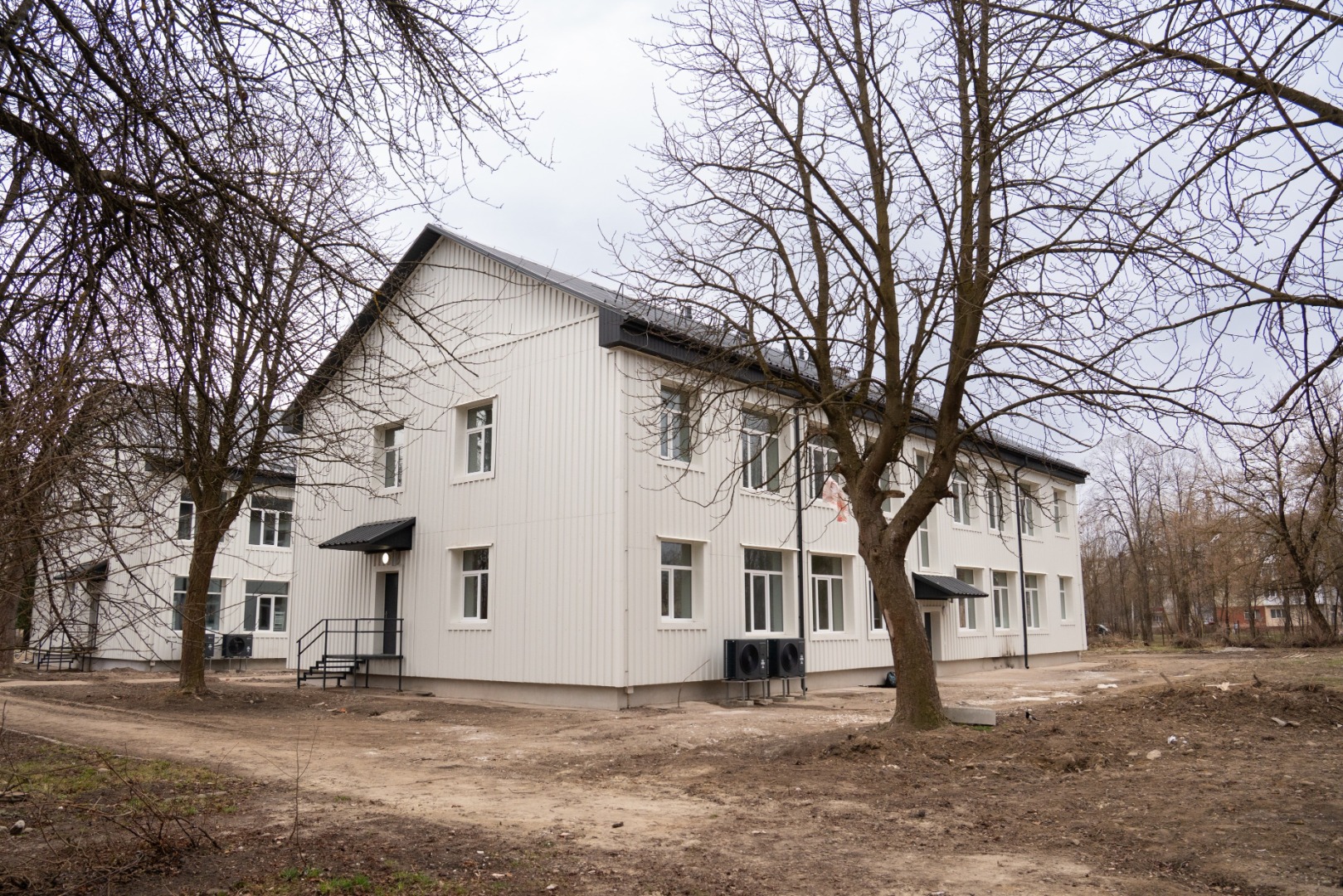
Even as the war continues, Ukraine is rebuilding—not only its infrastructure, but also its communities. In the western Ukrainian city of Kalush, an abandoned kindergarten has been transformed into 48 modern, affordable apartments, providing homes for around 150 people. What was once an empty public building for over 20 years is now a vibrant residential complex for internally displaced families.
More than a reconstruction project, Kalush represents a new pilot model for Ukraine: housing that is fast, cost-effective, socially inclusive, and ready to be replicated across the country under the newly evolving housing policy framework.
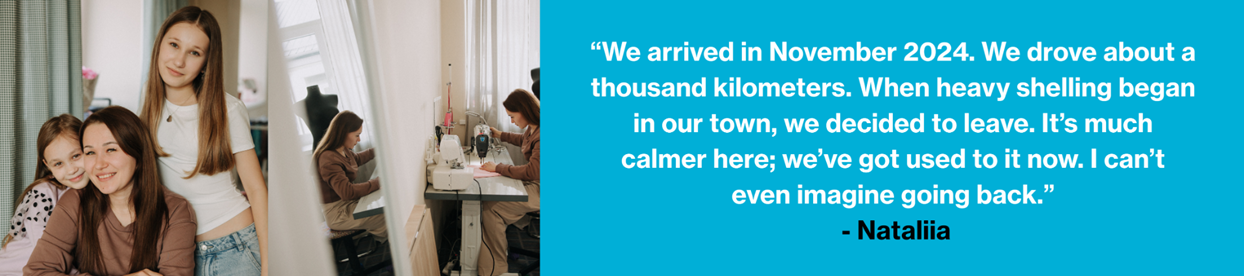
Kalush has become a place of both refuge and pressure. Since the start of the full-scale invasion, it has welcomed nearly 4,900 internally displaced people, while also hosting relocated businesses and services. This has placed significant strain on an already limited housing system.
At the center of Kalush stands the former kindergarten “Zirochka” — meaning “Little Star” in Ukrainian — a building deeply embedded in the city’s collective memory. For decades, it served as one of the city’s main early childhood institutions.
After the kindergarten was relocated to a newer facility, the building remained vacant for nearly ten years. Despite its central location—next to a primary school, shops, and sports facilities—it gradually fell into disuse. Yet structurally, the building remained sound. Rather than demolish it, partners saw an opportunity to adapt it.
It was a full-scale reconstruction that turned a long-standing public building into modern, energy-efficient housing. To adapt the building for residential use, it was renovated both inside and out. The layout was redesigned, new internal walls were installed, and the roof was fully replaced. Key engineering systems were also modernised, including electrical wiring, plumbing, heating, ventilation, water supply, sewage, and other utilities. The building was also adapted to improve accessibility for people with disabilities. Fire safety was significantly upgraded through modern detection and protection systems.
Sustainability was integrated into every stage of the project. Rather than demolish and rebuild, the project prioritised adaptive reuse—preserving the existing structure and minimising construction waste. Recycled and reused materials were incorporated throughout the building, including carpets, linoleum, glass blocks, and fittings. Furniture and appliances were largely donated by partners, reducing both costs and environmental impact.
One of the most unique aspects of the Kalush project is how the new housing design was shaped by the original kindergarten layout. Instead of fully restructuring the building—which would have increased costs and waste—the project team chose to adapt the apartments to the existing structure. This resulted in a variety of layouts, with each apartment slightly different. Most apartments are fully equipped with a private kitchen and bathroom, and furnished with essential items—many of them donated. Some apartments have shared bathrooms and kitchens. Because many residents arrive with few or no belongings, this level of readiness is essential.
The Kalush project is deeply rooted in social impact. The 48 apartments are home to internally displaced households from across Ukraine, including eastern regions heavily affected by the war. The project goes beyond providing apartments—it creates a support system. Residents benefit from: Long-term, stable housing agreements, affordable monthly contributions, reduced energy costs due to efficient systems and access to social support services.
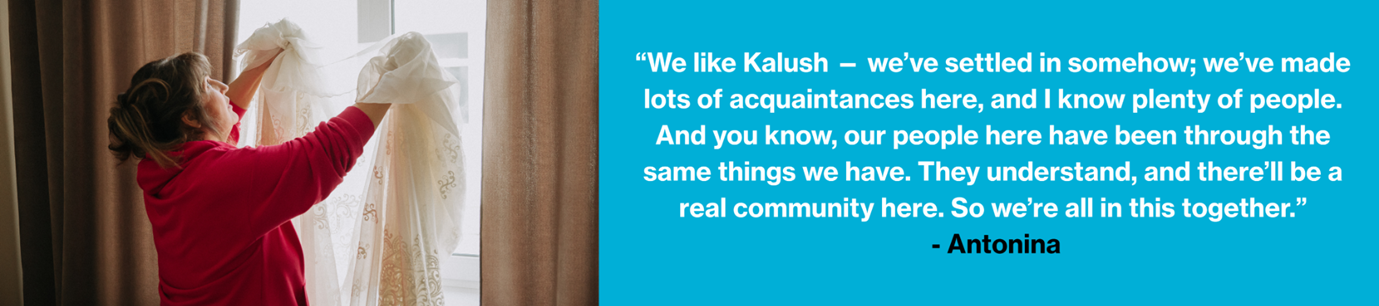
Community engagement is a central component. Dedicated staff support residents with integration, referrals to services, and conflict resolution. Job support initiatives have already been organized, particularly targeting women, helping them access employment opportunities within the local economy. Future plans include an intergenerational playground, a greenhouse built from recycled materials, community activities that foster connection and mutual support, and more.
Kalush is not just a one-time success—it is a pilot model of affordable housing. “Zirochka is a pilot model of affordable housing with the potential to be scaled across Ukraine. It is important for us that this project becomes an example for other cities seeking long-term and sustainable housing solutions,” said Orkhan Aliyev, National Director of Habitat for Humanity in Ukraine.
The story from Kalush reflects a broader European challenge: millions of homes and public buildings remain vacant, while affordable housing shortages continue to grow and the building sector remains a major source of carbon emissions. Building on Habitat for Humanity’s Empty Spaces to Homes approach, the Zirochka project shows how adaptive reuse can turn underused buildings into safe, affordable homes while reducing costs and environmental impact.
More than 2 million people experience homelessness each year across Europe and OECD countries, while nearly 900,000 people are homeless on any given night. Yet more than 47 million homes across Europe are estimated to stand empty. While the Zirochka project is unique to Kalush, Ukraine, its lessons apply far beyond one city. It demonstrates that adaptive reuse can create affordable housing quickly, at lower cost, and with reduced carbon emissions — while also preserving community assets, revitalizing unused spaces, and giving families access to safe, dignified homes.